If you are evaluating attendance solutions for your business, you have likely run into two very different pitches. One vendor tells you a biometric machine at the office door is all you need. Another tells you to move everything to the cloud. The truth is that these are not really competing categories — one is a piece of hardware, the other is the software layer that makes that hardware useful across an entire organisation.
This guide breaks down what a cloud based attendance system actually is, how it differs from a traditional standalone biometric machine, and why most growing businesses in India end up needing both working together rather than choosing one over the other.
What is a Cloud Based Attendance System?
A cloud based attendance system is an attendance management platform where all attendance data — whether captured through a biometric device, a mobile app, or a web check-in — is stored and processed on a central cloud server rather than on a local machine at a single office. This means HR teams, managers, and business owners can view attendance data from any location, on any device, in real time.
Compare this to a traditional standalone biometric machine, which typically stores data locally on the device itself. To retrieve reports, someone physically has to export data from that machine or connect to it over a local network. If you have five branches, you effectively have five disconnected attendance silos, each needing separate handling.
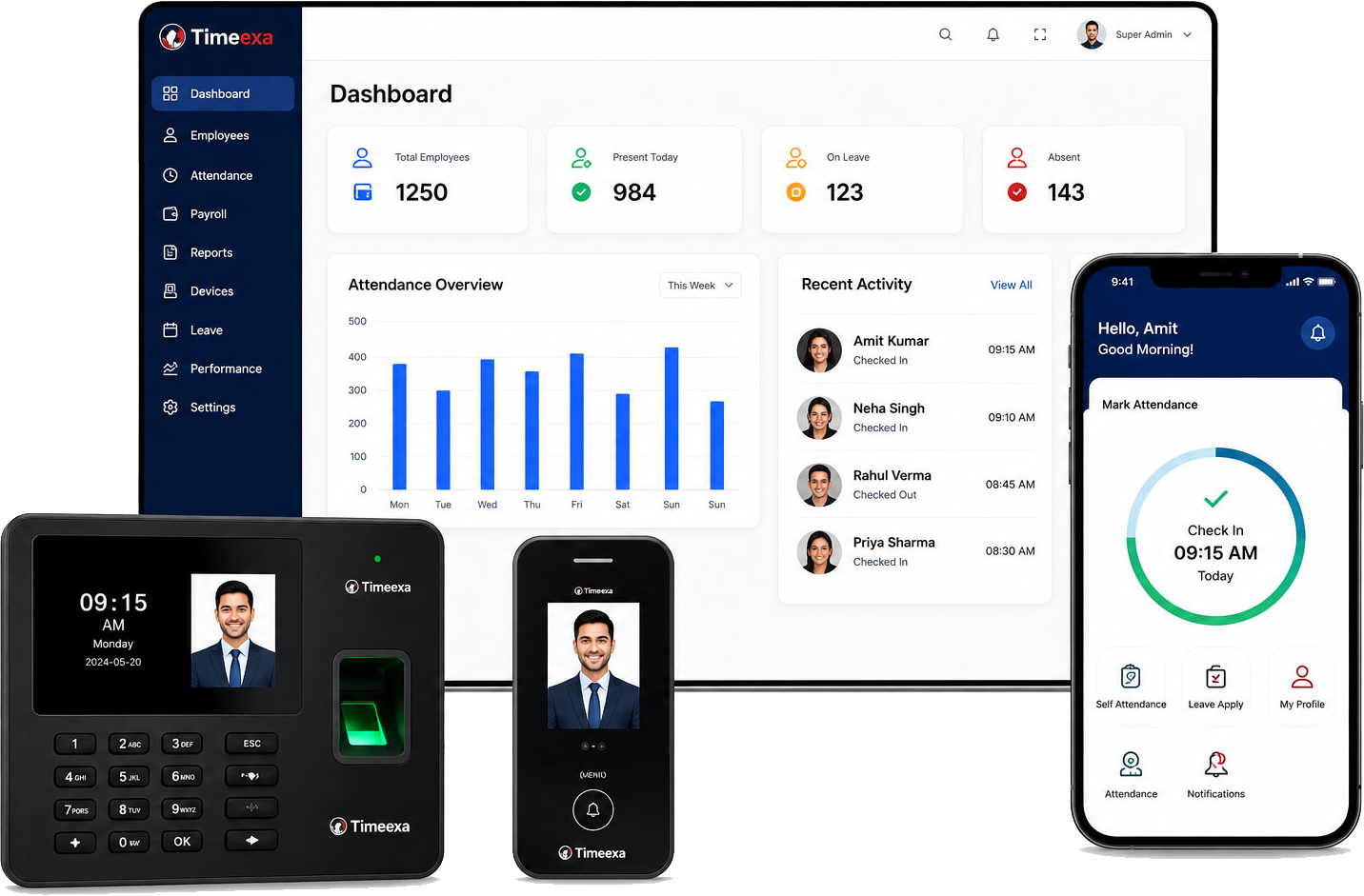
A proper attendance management system built on the cloud solves this by giving you one unified dashboard, regardless of how many locations, devices, or employees you have.
Cloud Attendance vs Traditional Biometric Machines: The Core Difference
It helps to be precise about what each term actually refers to:
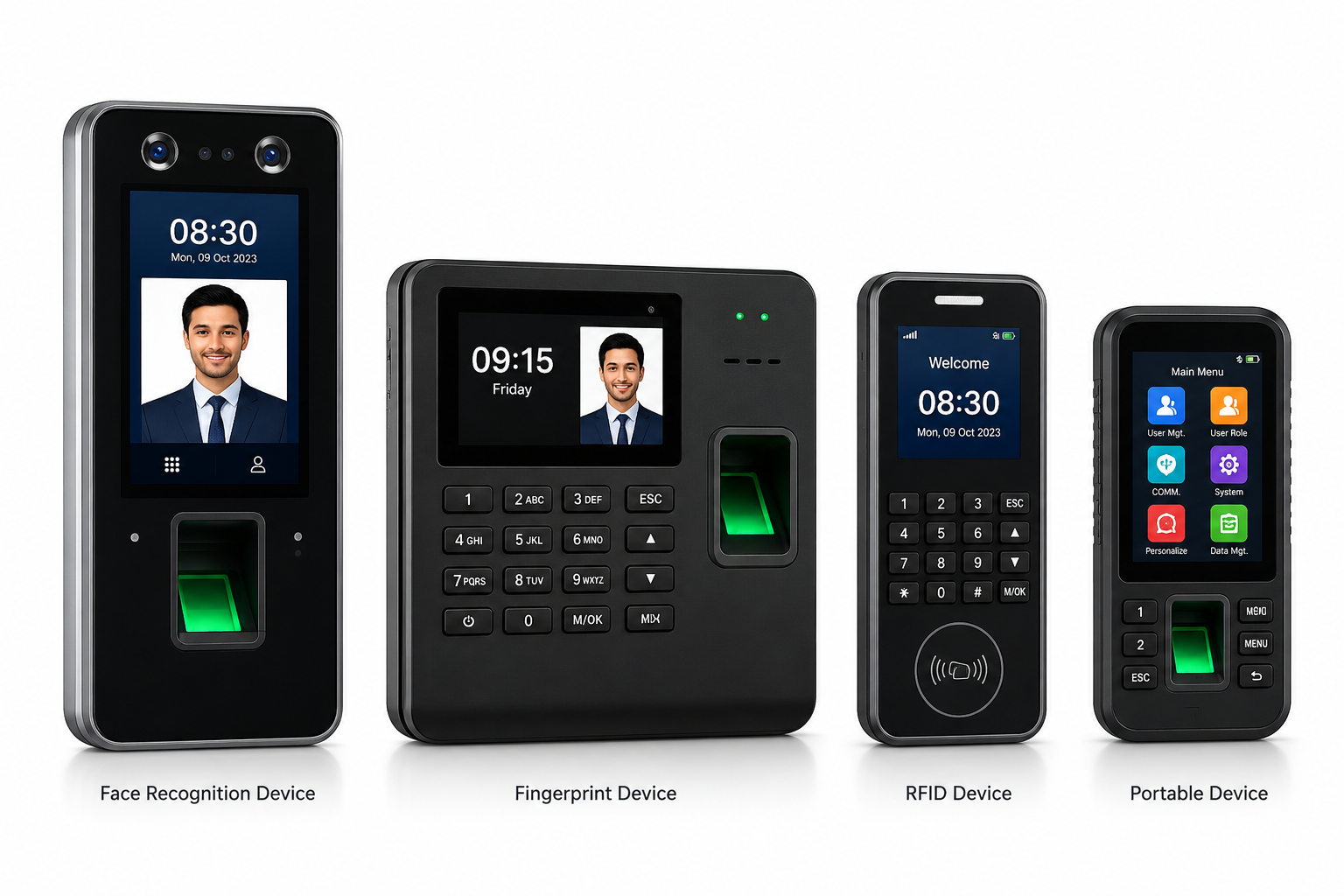
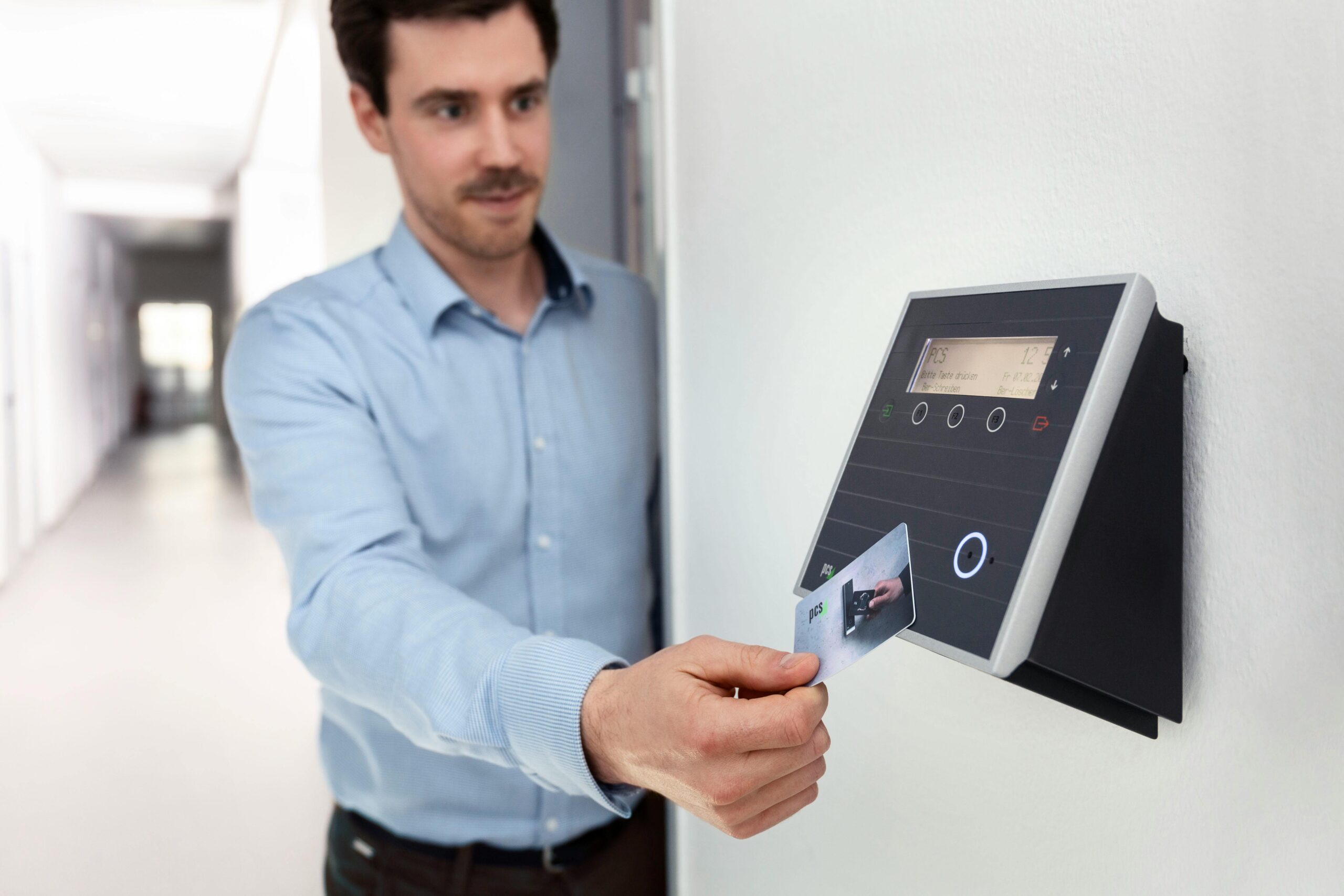
- A biometric attendance machine is the physical hardware — a fingerprint scanner or facial recognition camera — installed at an entry point. Its job is to verify identity and record a check-in or check-out event.
- Biometric attendance software is the layer that processes that data, applies your attendance rules, and generates reports.
- A cloud attendance software platform takes this further by hosting that entire software layer online, so data from every device, every branch, and every employee syncs to one place automatically, without manual exports or local network dependency.
In practice, the real comparison is not “cloud versus biometric.” It is “connected versus disconnected.” A biometric machine without cloud connectivity is accurate but isolated. A cloud based attendance system connected to biometric devices gives you both accuracy and centralised visibility.
Where Traditional Standalone Biometric Machines Fall Short
Standalone biometric machines were designed for a single-location, single-shift world. As businesses scale, several limitations start to show:
- No real-time visibility. Data usually needs to be manually pulled or exported before HR can see it, which means attendance issues are often noticed only after payroll processing begins.
- Branch-level silos. Each office location effectively runs its own separate attendance record, with no automatic consolidation across branches.
- Manual data merging. Someone has to combine data from multiple machines into a single spreadsheet before payroll or reporting can happen, introducing delays and human error.
- Limited remote management. Adjusting shift rules, holiday calendars, or employee records typically requires physical access to each device.
- No built-in reporting depth. Basic biometric machines are often limited to raw log exports rather than structured, ready-to-use attendance reports.
These are not flaws in the biometric technology itself — fingerprint and facial recognition remain highly accurate. The limitation is the lack of a connected software layer sitting on top of the hardware.
Why Cloud Based Attendance Systems Are Becoming the Standard
A cloud based time and attendance platform addresses every one of the gaps above, while still using the same biometric hardware for accurate identity verification:
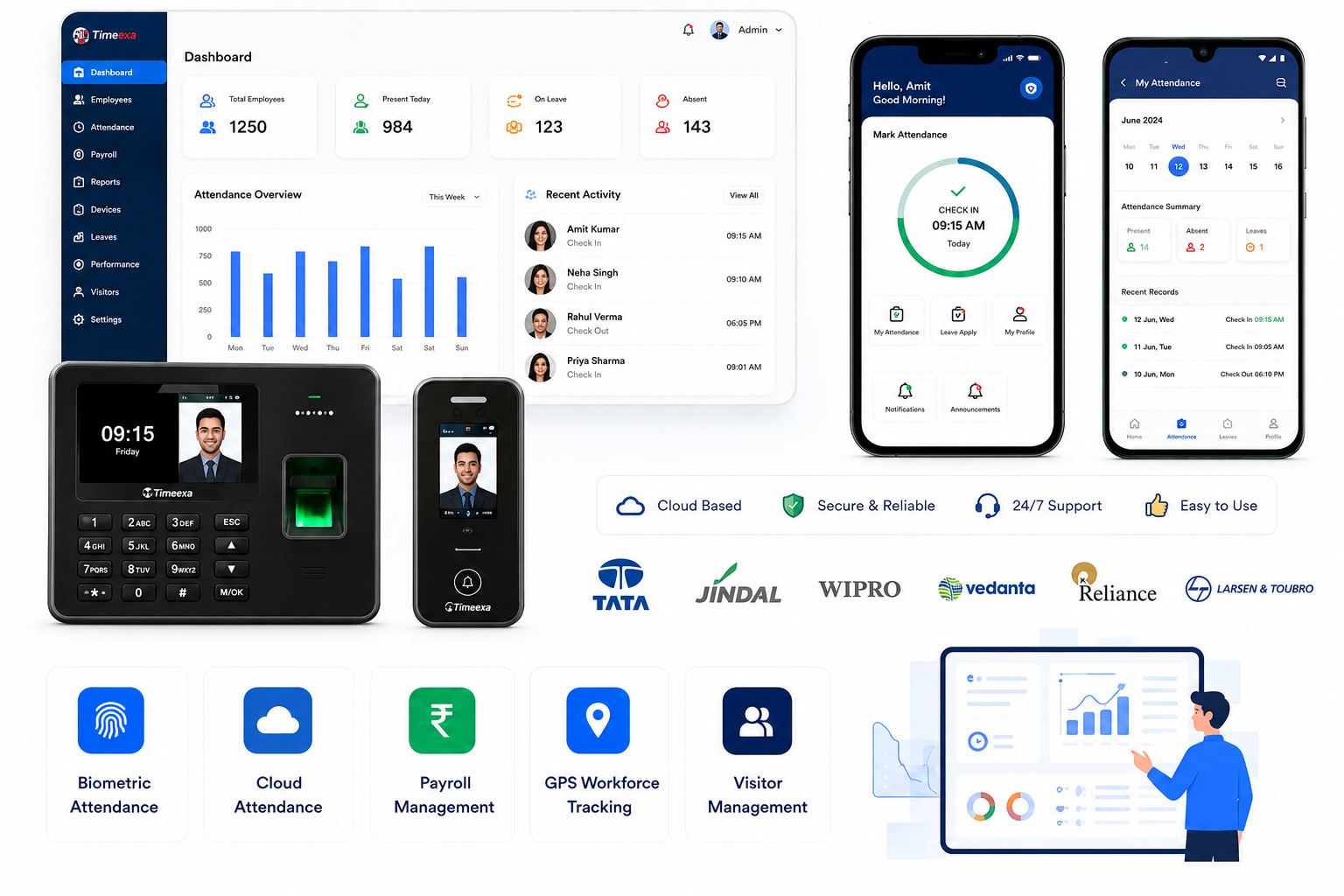
- Centralised, real-time dashboard. HR and management can view attendance across every branch and device from a single screen, updated instantly as employees check in.
- Multi-branch consolidation. Data from every location automatically feeds into one system, removing the need for manual merging.
- Remote configuration. Shift timings, leave policies, and holiday calendars can be updated centrally and pushed across all connected devices.
- Structured reporting. Attendance data is automatically compiled into ready-to-use reports, rather than raw logs that need manual processing.
- Scalability without hardware overhauls. Adding a new branch or device simply means connecting it to the existing cloud system, rather than setting up an entirely separate local network.
- Direct payroll integration. Verified attendance data flows straight into salary calculation, removing the manual reconciliation step that standalone machines cannot handle on their own.
This is precisely the gap that Timeexa’s cloud attendance software is built to close — combining the accuracy of biometric verification with the visibility and scalability of a cloud-hosted system.
Do You Need to Choose Between Them?
In most real business scenarios, the answer is no. The most effective setup is a cloud based attendance system that is connected to biometric hardware, rather than treating cloud and biometric as competing options.
Here is how that typically plays out for different business types:
- A single-location business with a stable, office-based team can start with a biometric attendance system connected to the cloud from day one, giving them accuracy and remote visibility together.
- A multi-branch business, such as a chain of clinics or retail stores, benefits most from a fully cloud-based setup where every branch’s biometric data consolidates into one dashboard.
- A business with field, sales, or delivery staff who are never near a fixed device will need to extend attendance capture beyond biometric hardware entirely, using a mobile attendance app or GPS workforce tracking, both of which still sync into the same cloud dashboard.
- Any business processing salaries based on attendance will eventually need this data flowing into a payroll management software, so that verified check-ins translate directly into accurate payslips without manual data transfer.
- Organisations that also need to track visitors or contractors on-site can add a visitor management system to the same connected platform.
The underlying principle is simple: biometric hardware captures accurate identity data, and the cloud layer is what makes that data useful, visible, and actionable across the entire organisation.
Pricing — What Should You Expect to Pay?
Pricing for a cloud based attendance system typically depends on the number of employees, the number of branches or devices you need to connect, and how much of the payroll and reporting functionality you require.
Timeexa offers four transparent plans built around this:
- Starter Plan — Free (first year): Suited to small offices, clinics, retail shops, and startups with up to 50 employees. Includes unlimited biometric devices, employee and attendance management, a live attendance dashboard, basic reports, and cloud hosting. Renewal is ₹999 per year from the second year, complimentary in year one with a supported biometric device purchase.
- Business Plan — ₹499/month: Designed for SMEs, schools, hospitals, and manufacturing units with up to 250 employees, and unlimited branches. Adds leave, holiday, and shift management, duty roster planning, device monitoring dashboard, and advanced attendance reports.
- Professional Plan — ₹999/month: Built for multi-location organisations and growing enterprises with up to 1,000 employees. Adds server-side employee enrolment, remote employee synchronisation, device health dashboard, branch-wise analytics, and a notification centre.
- Enterprise Plan — ₹2,499/month: Aimed at large enterprises and factories with up to 5,000 employees. Adds API access, webhook and ERP/HRMS integration, single sign-on (SSO), custom reports, and a dedicated account manager with SLA-based support.
Because the Business Plan onward includes unlimited branches, businesses planning to scale across multiple locations should evaluate that tier or above rather than staying on a single-location setup. Full details and current rates are available on Timeexa’s pricing page, and a free demo is available before committing to a plan.
Making the Transition to a Cloud Based System
For businesses currently relying on standalone biometric machines, moving to a connected cloud system is usually a phased process:
- Assessment — existing biometric devices are checked for compatibility with the cloud platform.
- Integration — compatible devices are connected to the cloud system, while incompatible ones are flagged for replacement.
- Data migration — historical attendance records are imported into the new centralised dashboard where possible.
- Parallel run — the cloud system operates alongside the existing setup for one payroll cycle to validate accuracy.
- Full switch-over — once validated, the cloud platform becomes the single source of truth for attendance and payroll.
Most businesses complete this transition within one to two weeks, without disrupting daily attendance capture.
Final Thoughts
The choice between a cloud based attendance system and a traditional biometric machine is really a choice between a connected system and an isolated one. Biometric hardware remains the most reliable way to verify identity at check-in, but without a cloud layer on top, that data stays trapped at the device level.
For businesses with a single office and a stable team, a connected biometric setup may be sufficient. For anyone managing multiple branches, remote staff, or scaling headcount, a proper cloud based attendance system is what turns accurate check-ins into centralised visibility and payroll accuracy. Explore Timeexa’s cloud attendance software, compare pricing plans, and book a free demo to see which setup fits your business.
Why Timeexa is the Best Cloud Based Attendance System
Timeexa offers a complete cloud-based attendance system that works for offices, schools, factories, hospitals, and enterprises across India. With advanced features like face recognition, GPS tracking, mobile attendance, automatic payroll, and visitor management, all in one platform, Timeexa helps businesses save time, reduce errors, and improve workforce productivity.
Trusted by 5000+ businesses and 2 million daily users, Timeexa is designed for modern Indian businesses that need a smart, reliable, and affordable attendance management solution.
Ready to upgrade from your old biometric machine to a smarter cloud-based attendance system? Book a free demo with Timeexa today and experience the difference.
Our Products
Complete Workforce Management Solutions

Biometric Attendance System
Advanced biometric attendance solution supporting face recognition, fingerprint authentication, RFID cards, QR code attendance, and real-time cloud synchronization.
- Face Recognition Attendance
- Fingerprint Attendance
- RFID Card Support
- QR Code Attendance
- Real-Time Cloud Sync

Cloud Attendance Software
Manage employee attendance, shifts, leave, holidays, and reports securely from anywhere using our scalable cloud attendance platform.
- Multi-Company Management
- Multi-Branch Support
- Employee Self Service
- Attendance Dashboard
- Leave Management

Payroll Management Software
Automate payroll calculations, overtime management, salary processing, and payslip generation integrated directly with employee attendance data.
- Salary Automation
- Overtime Calculation
- PF & ESI Support
- Payslip Generation
- Payroll Reports

GPS Workforce Tracking
Track field employees, technicians, delivery staff, drivers, and remote teams using GPS-enabled attendance and real-time location monitoring.
- Live Location Tracking
- Geo-Fencing
- Route Monitoring
- Visit Tracking
- Mobile Attendance
Mobile Attendance App
Allow employees to mark attendance directly from mobile devices using selfie verification, GPS location tracking, and geo-fencing.
- Selfie Attendance
- Geo Attendance
- Mobile Attendance
- Leave Requests
- Attendance History

Visitor Management System
- Visitor Registration
- OTP Verification
- Visitor Pass Printing
- Employee Approval Workflow
- Reception Dashboard
Common Questions About Cloud Based Attendance Systems
Not necessarily. Standalone biometric machines often carry a one-time hardware cost but limited software capability. A cloud based attendance system typically involves a device cost plus a software subscription, but delivers significantly more value through centralised reporting, multi-branch support, and payroll integration, which more than offsets the additional cost for most growing businesses.
In most cases, yes. Compatible biometric devices can be integrated with a cloud attendance platform, allowing businesses to retain their existing hardware investment while gaining centralised, real-time visibility.
Reliable systems include offline capture, where the device continues recording attendance locally and automatically syncs the data to the cloud once connectivity is restored.
Reputable platforms encrypt attendance and biometric data both in transit and at rest, and typically offer role-based access so that only authorised personnel can view or export sensitive records.
For multi-branch businesses, a cloud based attendance system is generally essential, since it consolidates data from every branch’s biometric devices into one unified dashboard, something standalone machines cannot do on their own.